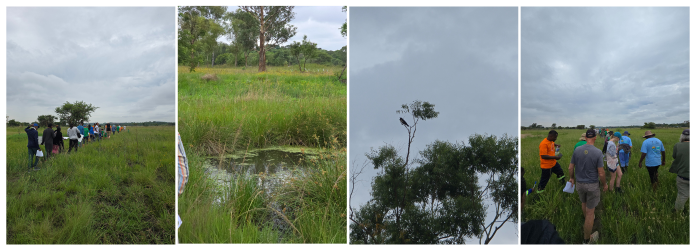

I went out to Monavale Vlei on Sunday morning to join a guided wetland walk, what an experience that turned out to be. Monavale is one of Zimbabwe’s seven Ramsar sites, internationally recognised for its ecological importance under the Ramsar Convention, which was signed in 1971 in the Iranian city of Ramsar to protect wetlands around the world. Alongside Monavale, the other Ramsar sites in Zimbabwe include Lake Chivero, Cleveland Dam, Driefontein Grasslands, Chinhoyi Caves, Mana Pools, and Victoria Falls, each unique in its own right.
It was a good turnout; there must have been about 50 people altogether, and we divided into smaller groups to make the walk more manageable. Our group was led by Dorothy Wakeling and Jimmy Mahachi, who guided us through the vlei with such passion and knowledge. They explained that the wetland hosts over 250 plant species, a staggering diversity when you think about it. What fascinated me most was how they explained that plants seem to appear and disappear throughout the years. You can walk for months without seeing a particular species, and then suddenly, as if from nowhere, it re-emerges. It’s almost like the soil is holding a secret seed bank underground, waiting for the right moment to release its treasures.
Among the many birds we spotted, the rattling cisticola stood out. A small, lively bird with a distinctive long tail that it flicks as it darts about the trees, it filled the air with its sharp, buzzing call. Fun fact: the cisticola’s name comes from Greek, meaning “dweller among reeds,” which perfectly describes its love for wetlands and grasslands. Watching it flit between the reeds was a reminder of how these habitats are perfectly tailored to the creatures that live in them.
Dorothy and Jimmy also spoke about the dangers of wetland destruction. They explained that drying up wetlands is essentially self-destruction for the city as wetlands act as natural water reservoirs, and without them, Harare risks worsening its already critical water shortages. It was sobering to realise that protecting these wetlands isn’t just about saving plants and birds; it’s about safeguarding our own survival.
Should you have the opportunity, I strongly recommend participating in one of these walks. Go with family or friends, take time to listen to the bird calls, marvel at the seasonal plants, and reflect on how vital these wetlands are. Protecting them is protecting ourselves.