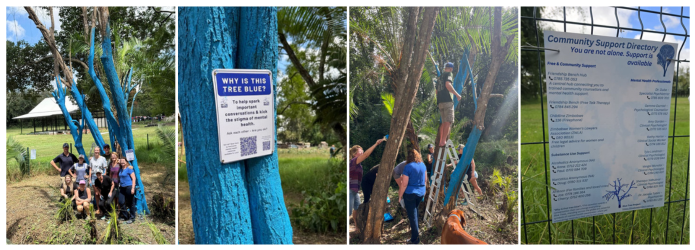

This past Sunday, the Blue Tree Project hosted a blue tree painting at the Wagzone. The Blue Tree Project began in 2019 in Western Australia, inspired by the heartbreaking loss of Jayden Whyte. What started as a tribute has since grown into a global movement, with thousands of trees painted in a striking shade of blue across the world. These trees stand as symbols of hope, gentle reminders that no one is alone, and invitations for conversations that many of us find difficult to start.
This particular gathering marked the second tree painted by this group in Zimbabwe. The first was done at the Kirk’s farm, in memory of Philip Jeans, affectionately known as PJ. While the reasons behind these gatherings are never easy, there is something profoundly meaningful about coming together in community, transforming grief into awareness, and awareness into action.
Clinical psychologist Amy Garden shared an important perspective: while talking about mental health can sometimes feel uncomfortable or even stir up difficult emotions, those conversations are essential. Often, people are not looking for solutions or advice but simply need someone to listen. A genuine “How are you really doing?” can go much further than we realise.
It made me reflect on how easy it is to overlook the small opportunities we have each day to show up for one another. Checking in on a friend, asking about their week, or simply sitting with someone without trying to fix anything, these are powerful acts of care.
There are also accessible ways to reach out for support if you or someone you know needs it. Initiatives like Friendship Bench offer a space for simple, meaningful conversations, even via WhatsApp. Sometimes, taking that first step to talk can make all the difference.
There are still many myths surrounding mental health conversations, that they are too heavy, too complicated, or better left avoided. But that is exactly what the blue trees challenge. They stand boldly in their colour, encouraging us to pause, to notice, and to connect. They remind us that being present, being kind, and being willing to listen can have a lasting impact. And perhaps most importantly, they remind us that sometimes the simplest act we can offer someone is just to be there.