
The May Sky
There are two full moons this month. The Frost Moon is on 1 May. The Fire Moon is on 31 May, and being the second full moon in the month it is a Blue Moon. New Moon is on 16 May.
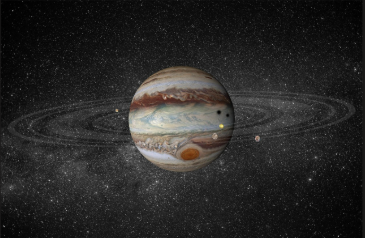
Venus and Jupiter still dominate the evening sky. Venus is very low in the west after sunset, just to the right of the Hyades which is the head of Taurus the Bull. The Hyades are a cluster of stars shaped like a letter A, currently on its side. Jupiter is high in the north-west. In the morning sky Mars is skulking near the eastern horizon while Saturn gets higher each day. On 14 May the old moon, two days from New, will be halfway between Mars and Saturn.
Comet C/2026 A1 (MAPS), might have been a spectacular sight after it passed the Sun, but like Daedalus went too close to the Sun and disintegrated. There is another comet, C/2025 R3 (PANSTARRS), that went around the Sun on 19 April. It was closest to Earth on 26 April but was too close to the Sun to be visible. On 1 May it will be to the left of the Hyades after sunset. Binoculars should pull it out and it may still be visible to the naked eye in a clear, dark sky. It will get higher and fainter every night. By mid-month it will be below Rigel, the bright, blue star that marks Orion’s knee. If you can find this comet at the start of the month, see how long you can follow it with binoculars.
The Eta Aquariid meteor shower is usually one of the best in the year, peaking on 6 May. The meteors are debris left behind by Comet Halley. This year the waning Moon will interfere in the early morning when the shower peaks. If you are an early riser, watch the sky and see how many meteors you can see.
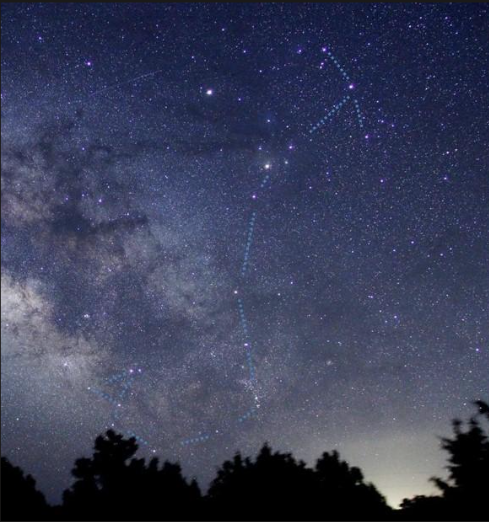
May is the month when Scorpius, the Scorpion, is a great clock in the sky. Watch it rise just after sunset, it culminates at midnight and sets around dawn. I am always on Kariba at the end of May and sleep under the stars. If I wake during the night I don’t need to look at my watch to tell how long till dawn. The legend is that Orion the hunter was stung by the scorpion and threw it to the far end of the sky. As Orion sets, Scorpius rises.
The Astronomical Society of Harare will hold its next meeting on Saturday 9 May at 2:30 for 3:00 pm in the gazebo at Mukuvisi Woodland. There will be tea followed by presentations on astronomical topics. All are welcome – the presentations are intended for people with no astronomical knowledge. Mukuvisi charges a $2 entry fee.
Keep looking up!
Peter Morris, Astronomical Society of Harare